

Table of Contents
- Step 1: Get the Best Non-Alcoholic Beer Serving Temperature Right
- Step 2: Pour and Serve Alcohol Free Beer in the Right Glass
- Supplying Alcohol-Free Beer to Hospitality Venues
- Frequently Asked Questions
Last Updated: September 24, 2026
Step 1: Get the Best Non-Alcoholic Beer Serving Temperature Right
Learning how to serve alcohol free beer for best taste starts with temperature. The best non-alcoholic beer serving temperature is 3-5°C for lagers and stouts, and 6-8°C for ales and wheat beers. Serving too warm flattens the hops and pushes malt sweetness forward.
Chill bottles for at least four hours before serving. A fridge at 4°C works well for most styles.
- Lagers and pilsners: 3-5°C
- Stouts: 3-5°C, as Guinness 0.0 recommends
- Wheat beers and IPAs: 6-8°C
- Radlers: 3-5°C for maximum refreshment
The global non-alcoholic beer market is valued at USD 27.3 billion in 2026, according to Future Market Insights' non-alcoholic beer market report, so getting the basics right matters more than ever.

Step 2: Pour and Serve Alcohol Free Beer in the Right Glass
The right glass makes a real difference to how a booze-free beer tastes. Use a clean, dry, straight-sided glass for lagers, and a tulip or wheat beer glass for Weissbier. Skip the frozen glass, as it kills the aroma.
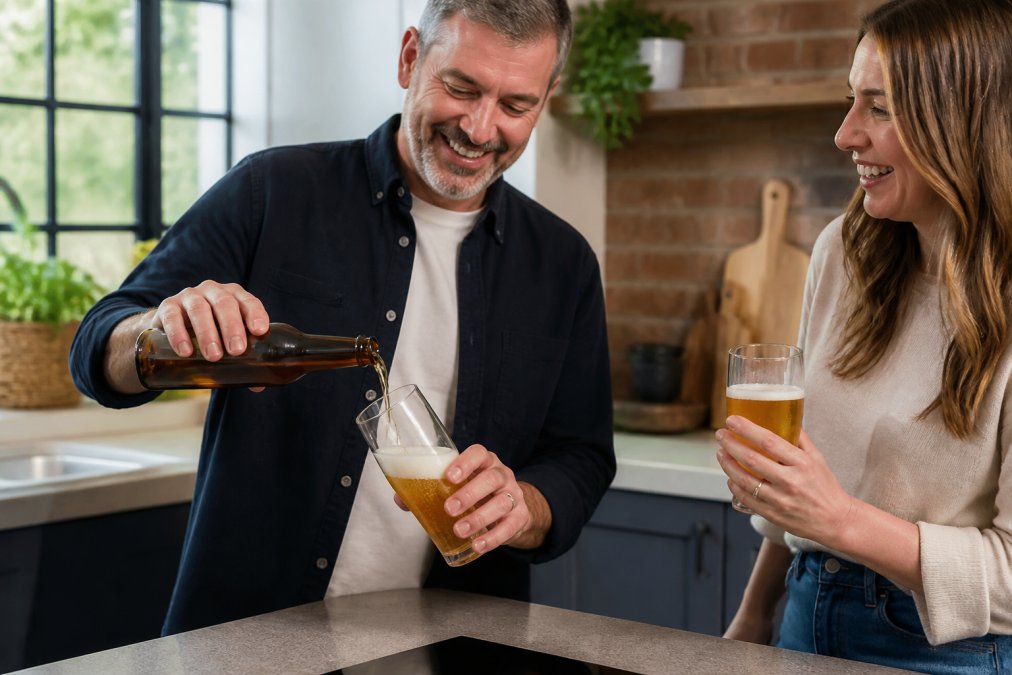
Pour at 45 degrees, then straighten the glass to build a finger of head. Aeration releases carbonation and lifts the hop and malt notes. For a non-alcoholic beer food pairing guide, match crisp lagers with fish and chips, and wheat beers with salads or spicy dishes.
Supplying Alcohol-Free Beer to Hospitality Venues
Supplying alcohol-free beer to hospitality venues is now a core part of any serious drinks list. Draught lines need strict cleaning routines to keep that crisp taste, and kegged stock should be filtered well.
We supply bars, restaurants, sports clubs and hotels. Talk to us about stocking your venue.
Our top picks for the trade:
| Beer | Style | Size | Price |
|---|---|---|---|
| Nirvana Bavarian Helles Lager | Helles lager | 500ml | £3.95 |
| Nirvana Alcohol Free IPA | IPA | 330ml | £2.75 |
| Guinness 0.0 Stout | Stout | 538ml | £3.95 |
| Krombacher Pils 0.0 | Pilsner | 330ml | £2.49 |
Frequently Asked Questions
Should alcohol-free beer be served colder than regular beer?
Yes, slightly. Without alcohol to round out the flavour, a non-alcoholic beer shows its best at around 3 to 5 degrees Celsius, the range Guinness recommends for its 0.0% stout. Standard ales sit comfortably at 6 to 8 degrees. Serve too cold and you mute the malt and hop aromas. Serve too warm and any off-notes become far more noticeable. A fridge set to 4 degrees works well for most lagers, pilsners and stouts.


Does glassware affect the taste of non-alcoholic beer?
It does. A straight-sided, tulip or stemmed glass lets aroma reach your nose, and aroma carries much of what you taste. A nucleated or etched base keeps carbonation alive and maintains a steady head. Always use a clean, dry, rinsed glass: detergent residue kills foam and leaves a soapy note that is more obvious in alcohol-free beer because there is no alcohol to mask it. Match the glass to the style, a tall flute for a pilsner such as Krombacher, a tulip for a wheat beer, and a pint glass for a stout.
How do you properly pour alcohol-free beer to get the best head?
Tilt the glass to 45 degrees and pour down the side until it is about two-thirds full, then straighten the glass and pour the rest down the centre. This releases carbon dioxide gently and builds a compact head rather than a flat, frothy one. Aeration matters because alcohol-free beer is often filtered during dealcoholisation, which strips some natural carbonation. A steady, slightly faster finish pour adds a little life back. Let the beer settle for 30 seconds before drinking so the head tightens and the aromas open up.
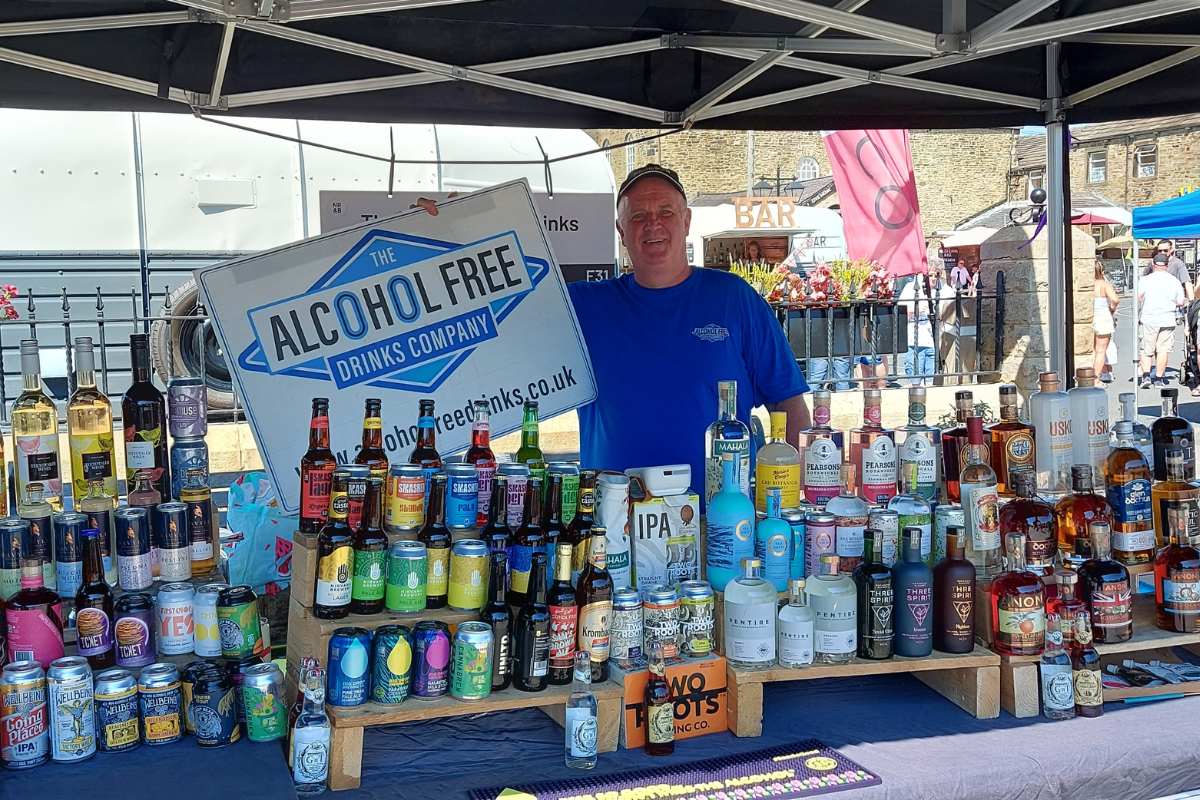
Getting alcohol-free beer to taste its best comes down to a few simple habits, and most venues still get them wrong. The Alcohol Free Drinks Company curates independent alcohol-free beers, wines and spirits, with trade accounts for bars, restaurants, sports clubs and hotels. Get in touch with us to stock your venue and give your customers a proper choice.
0 comments